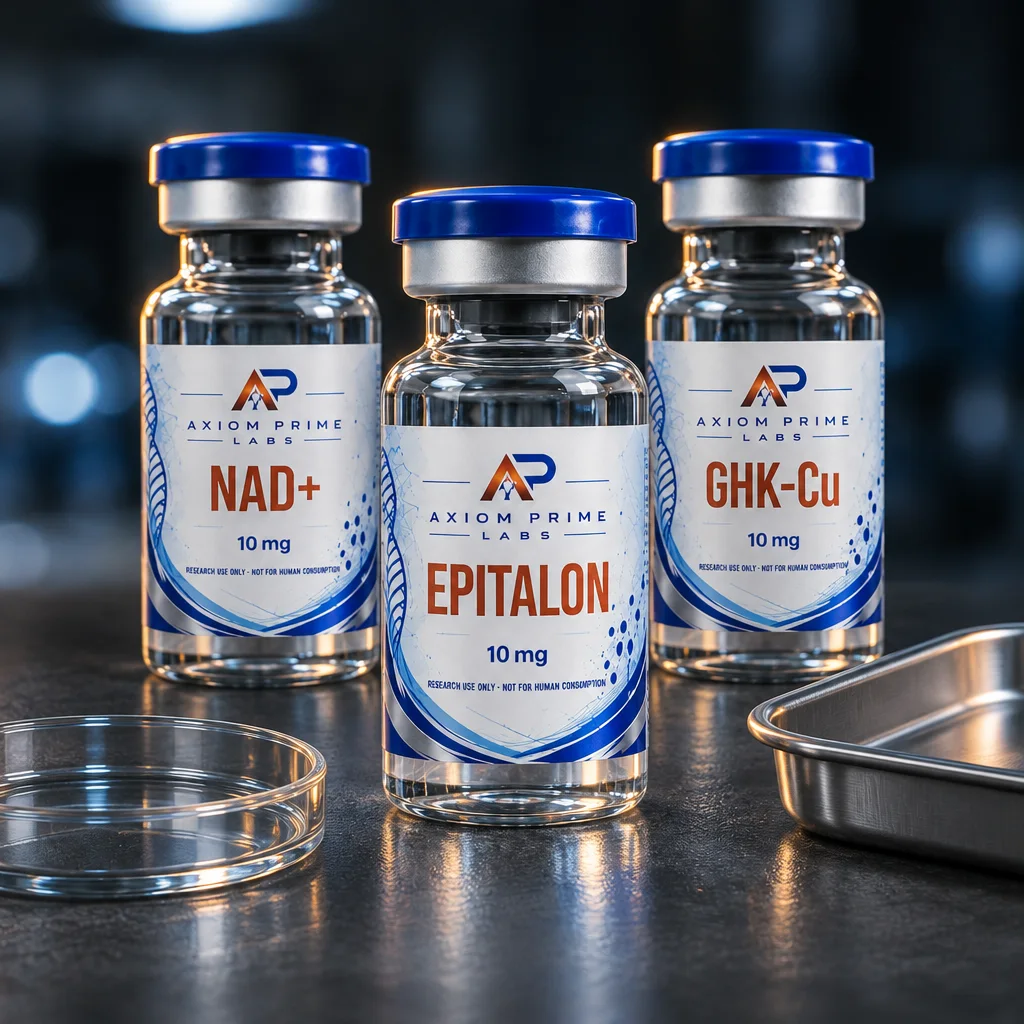
GHK-Cu in Laboratory Research: An Overview of the Copper Peptide
GHK-Cu is one of the most widely studied small peptides in cellular biology and longevity research. It’s a naturally occurring copper complex with a long research history, and it remains a common subject of laboratory investigation today. This article gives an overview of what GHK-Cu is and where it features in research.
What is GHK-Cu?
GHK is a tripeptide made of three amino acids: glycine, histidine and lysine (glycyl-L-histidyl-L-lysine). It has a strong affinity for copper(II) ions, and the copper-bound form is known as GHK-Cu.
GHK was first identified in human plasma in the early 1970s by Dr. Loren Pickart, who observed that it was present at higher levels in younger plasma than in older plasma. That observation helped make GHK-Cu a subject of interest in aging-related research.
Key areas of research
GHK-Cu has been studied across a range of laboratory and preclinical models, including:
- Extracellular matrix biology: research into collagen, elastin and glycosaminoglycan synthesis in cell models.
- Tissue remodeling and wound models: preclinical studies of tissue repair processes.
- Gene expression: studies using gene expression data suggest GHK may influence the expression of a large number of human genes, which has broadened interest in its role in cellular regulation (Pickart & Margolina, 2018).
- Antioxidant and copper-transport research: investigations into its role in copper delivery and oxidative stress models.
Why GHK-Cu features in longevity research
Because circulating GHK levels have been reported to decline with age, and because of its broad activity in gene expression and tissue-model studies, GHK-Cu is frequently included in research focused on cellular aging mechanisms. It sits alongside other compounds in our longevity research category, such as NAD+ and Epitalon.
GHK-Cu in research stacks
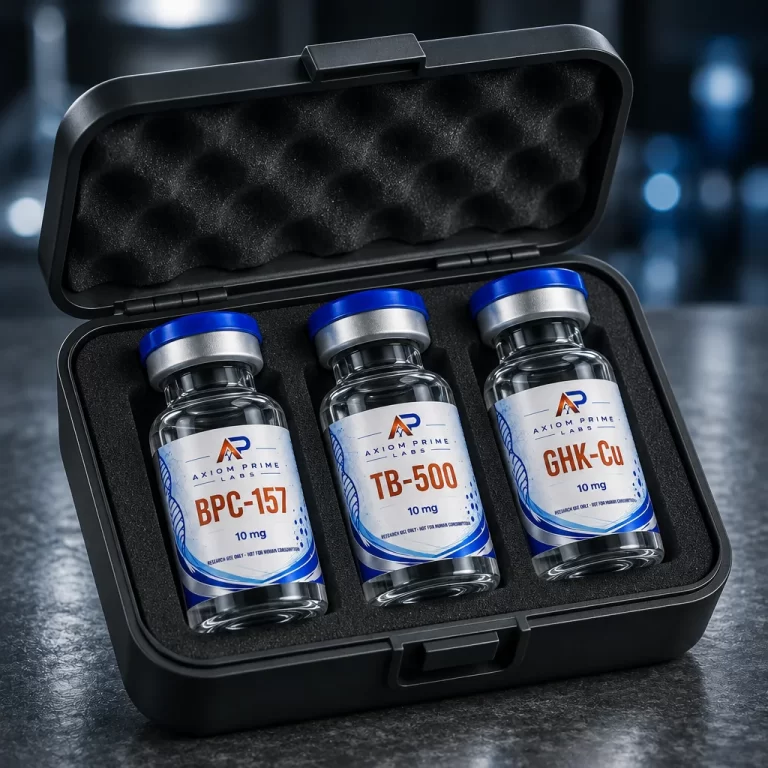
GHK-Cu is also a component of several multi-compound research preparations, including our Glow Stack (BPC-157 + TB-500 + GHK-Cu) and Klow Stack (which adds KPV).
Handling considerations
GHK-Cu is typically supplied as a lyophilized powder with a characteristic blue color from the bound copper. Like other research peptides, it should be kept sealed, dry, refrigerated and protected from light. See our peptide storage guide for general laboratory best practices.
A note on the evidence
Much of the research on GHK-Cu comes from cell culture, gene expression analysis and preclinical models. These findings help guide further investigation but do not establish effects in humans.
Research-grade GHK-Cu
Axiom Prime Labs supplies GHK-Cu as a lyophilized research material, batch-tested for identity and purity with a Certificate of Analysis available for every batch.
All products are for laboratory research use only and are not for human or veterinary use.
Research-grade materials, batch-tested
Every Axiom Prime Labs product is supported by analytical testing with a Certificate of Analysis available for every batch. U.S. shipping, with free shipping on orders of $200+.