GHK-Cu in Laboratory Research: An Overview of the Copper Peptide
GHK-Cu is one of the most studied small peptides in cellular and longevity research. Here’s an overview of its structure, discovery and the research areas it’s investigated in.

You must be 21 years of age or older to enter this website.
All products sold by Axiom Prime Labs are intended strictly for laboratory research purposes. They are not for human or veterinary use, have not been evaluated or approved by the FDA, and are not intended to diagnose, treat, cure, or prevent any disease.
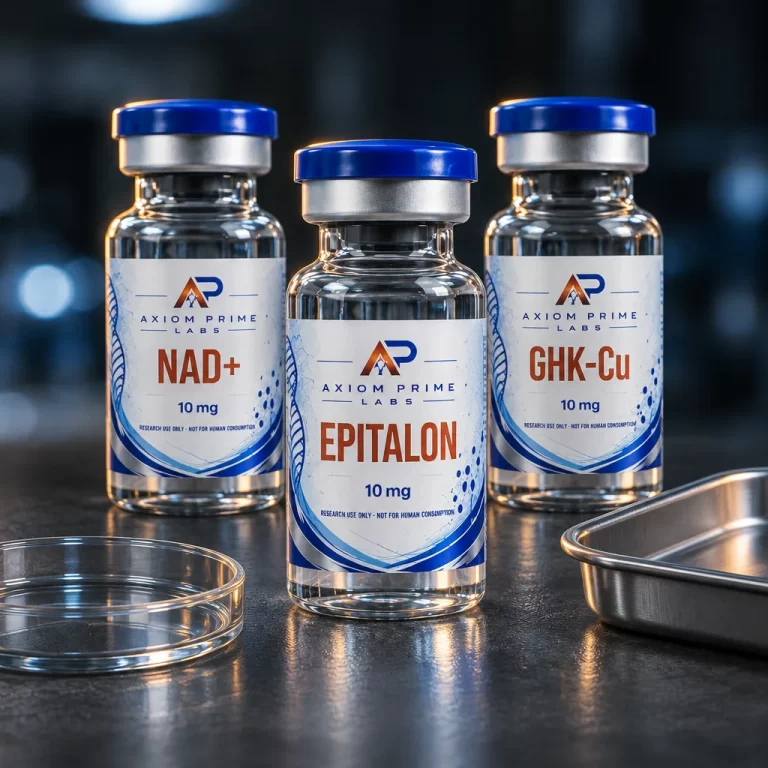
GHK-Cu is one of the most studied small peptides in cellular and longevity research. Here’s an overview of its structure, discovery and the research areas it’s investigated in.
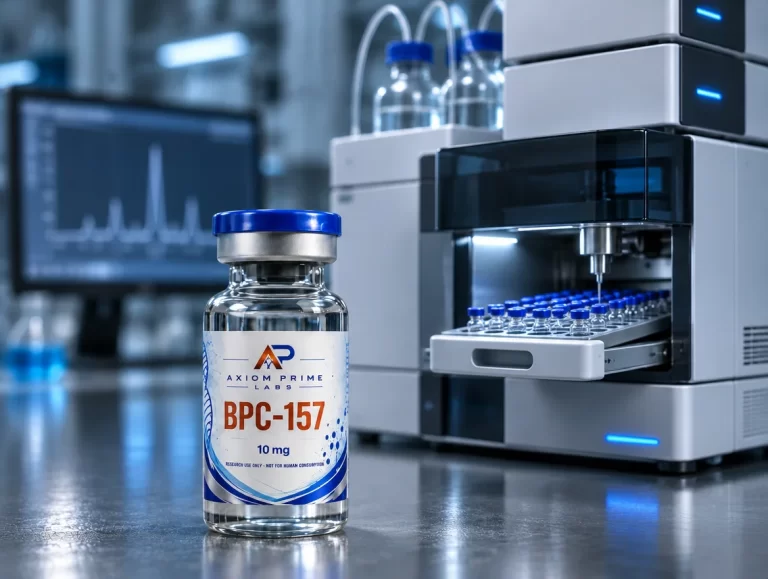
“≥99% purity by HPLC” appears on almost every peptide listing. Here’s what the number actually measures, how to read a chromatogram, and what purity doesn’t tell you.
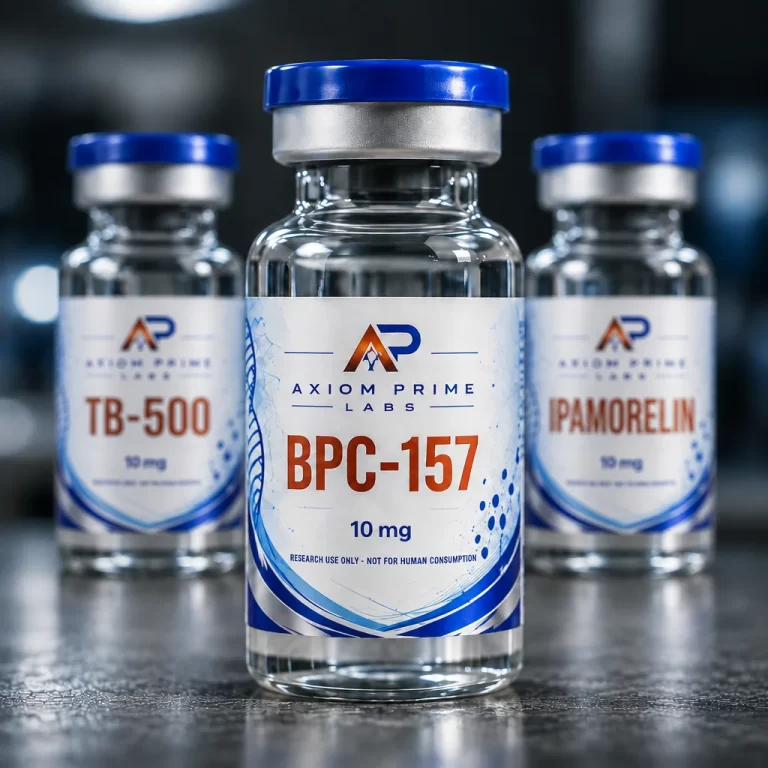
BPC-157 and TB-500 are two of the most widely studied research peptides, and they’re often discussed together. Here’s how their structures, origins and research focus differ.
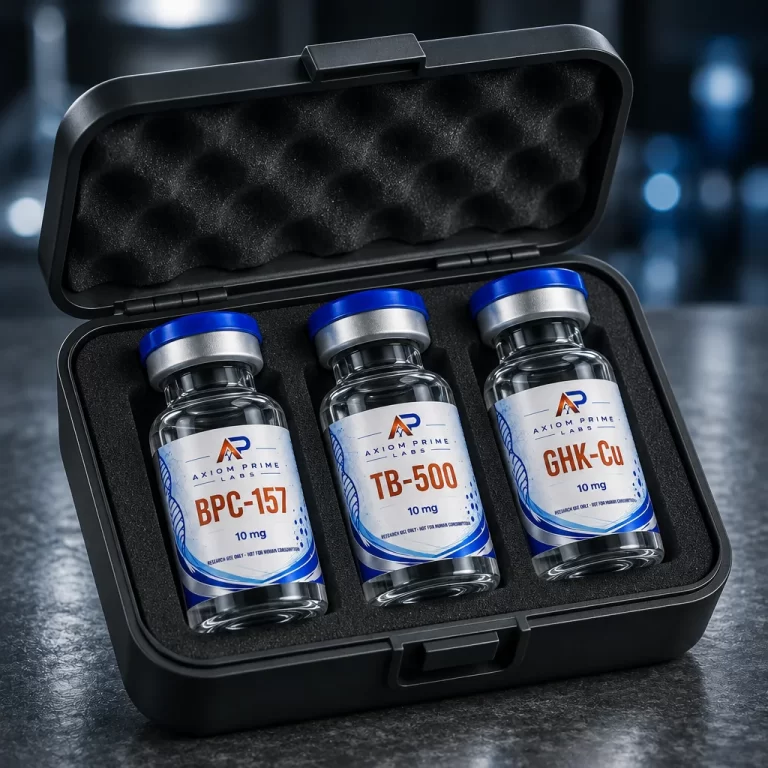
Proper storage protects peptide integrity and the reproducibility of your research. Here’s how to store lyophilized peptides and reconstituted solutions in the lab.
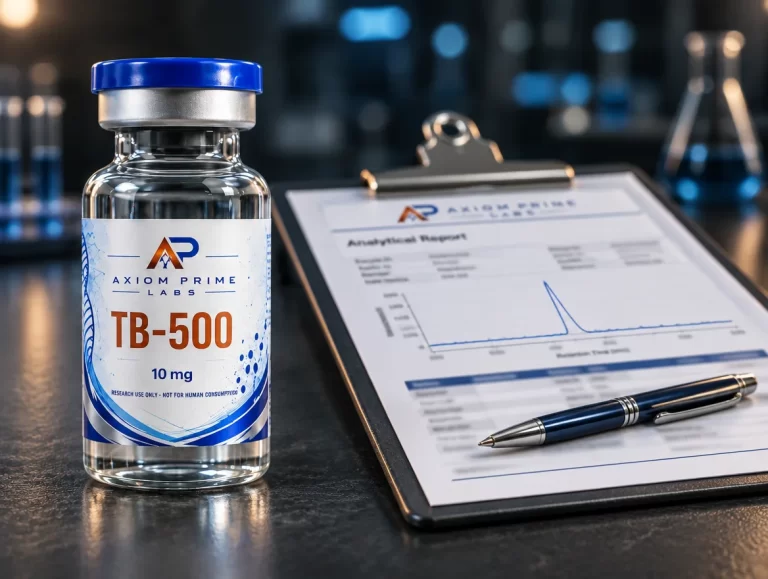
A Certificate of Analysis is the single most important document behind any research peptide. Here’s what a COA contains, how to read each section, and the red flags to watch for.