What Is a Certificate of Analysis (COA)? How to Read One for Research Peptides
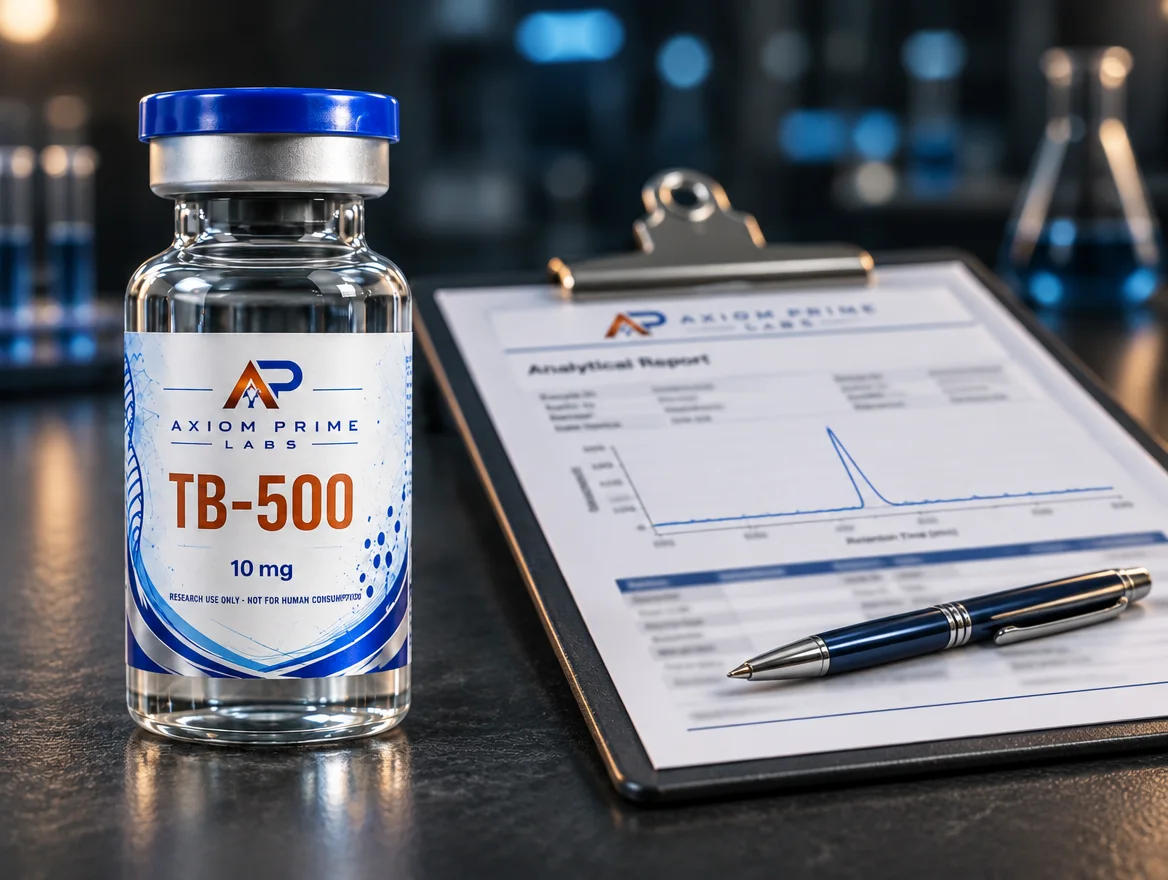
When you evaluate a research peptide, the most important document isn’t the product page. It’s the Certificate of Analysis (COA). A COA is the lab report that shows what is actually in the vial, and it’s the best way to compare research materials from different suppliers on equal terms.
This guide explains what a COA is, what each section means, and what to look for before you rely on a batch for laboratory work.
What is a Certificate of Analysis?
A Certificate of Analysis is a document issued for a specific production batch (or “lot”) of a material. It records the analytical tests performed on that batch and the results. For research peptides, a COA typically confirms two things:
- Identity: that the material is the peptide it claims to be.
- Purity: what percentage of the material is the target peptide versus impurities.
Because peptide synthesis can produce truncated sequences, deletion sequences and other by-products, two vials with the same name can differ meaningfully in quality. The COA is how you tell them apart.
The key sections of a peptide COA
1. Product and batch information
Every COA should clearly list the product name, the lot or batch number, the quantity (for example, 10 mg), and the date of analysis. The lot number is critical: it ties the report to a specific batch. A COA without a lot number, or with a lot number that doesn’t match your vial, tells you very little.
2. Purity by HPLC
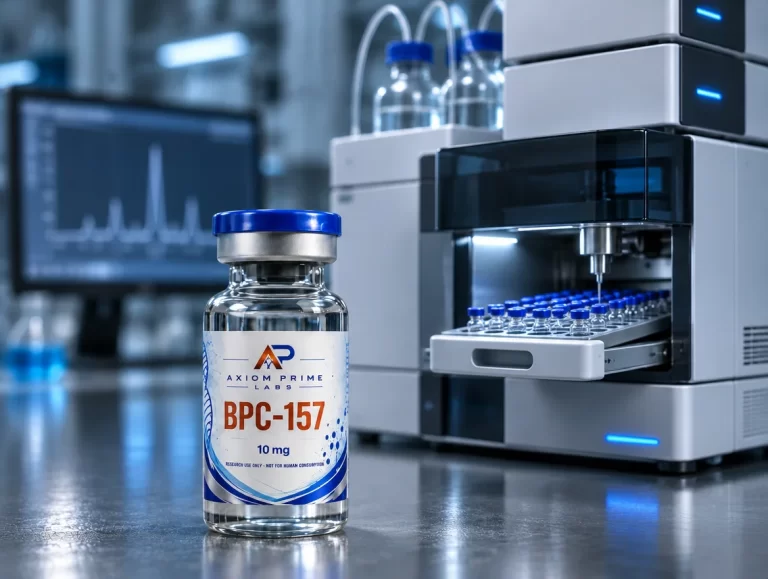
High-performance liquid chromatography (HPLC) separates the components of a sample so each can be measured. The result is usually reported as a percentage, such as ≥98% or ≥99% purity, alongside a chromatogram: a graph showing a large main peak (the target peptide) and any smaller peaks (impurities). We cover this in more depth in our guide to what HPLC purity means.
3. Identity by mass spectrometry
Purity alone doesn’t prove identity. A material could be highly pure and still be the wrong compound. Mass spectrometry (MS) measures the molecular weight of the sample and compares it with the theoretical molecular weight of the target peptide. A good COA reports both the expected and observed mass.
4. Appearance and other specifications
Many COAs also record physical characteristics such as appearance (for example, “white to off-white lyophilized powder”) and, in some cases, peptide content, water content or counter-ion information.
5. Who performed the testing
Note who ran the analysis and whether results come from an in-house lab or an independent third-party laboratory. Independent testing adds a layer of objectivity.
Red flags to watch for
- No lot number, or one that doesn’t match the product you received.
- A purity number with no chromatogram or supporting data.
- No identity testing (purity only, with no mass confirmation).
- A generic or very old report that appears to be reused across many batches.
- A supplier who won’t provide a COA on request.
How Axiom Prime Labs handles COAs
Every batch of our research materials is supported by analytical testing to verify identity and purity, and a Certificate of Analysis is available for every product. You can request the current batch COA for any item by emailing support@axiomprimelabs.com or through our contact form. Learn more about our process on our Quality Standards page.
The bottom line
A COA is the foundation of reproducible research. Before you begin work with any research peptide, confirm the lot number, review the HPLC purity and chromatogram, and check that identity has been confirmed by mass spectrometry. If a supplier can’t show you that, keep looking.
Research-grade materials, batch-tested
Every Axiom Prime Labs product is supported by analytical testing with a Certificate of Analysis available for every batch. U.S. shipping, with free shipping on orders of $200+.