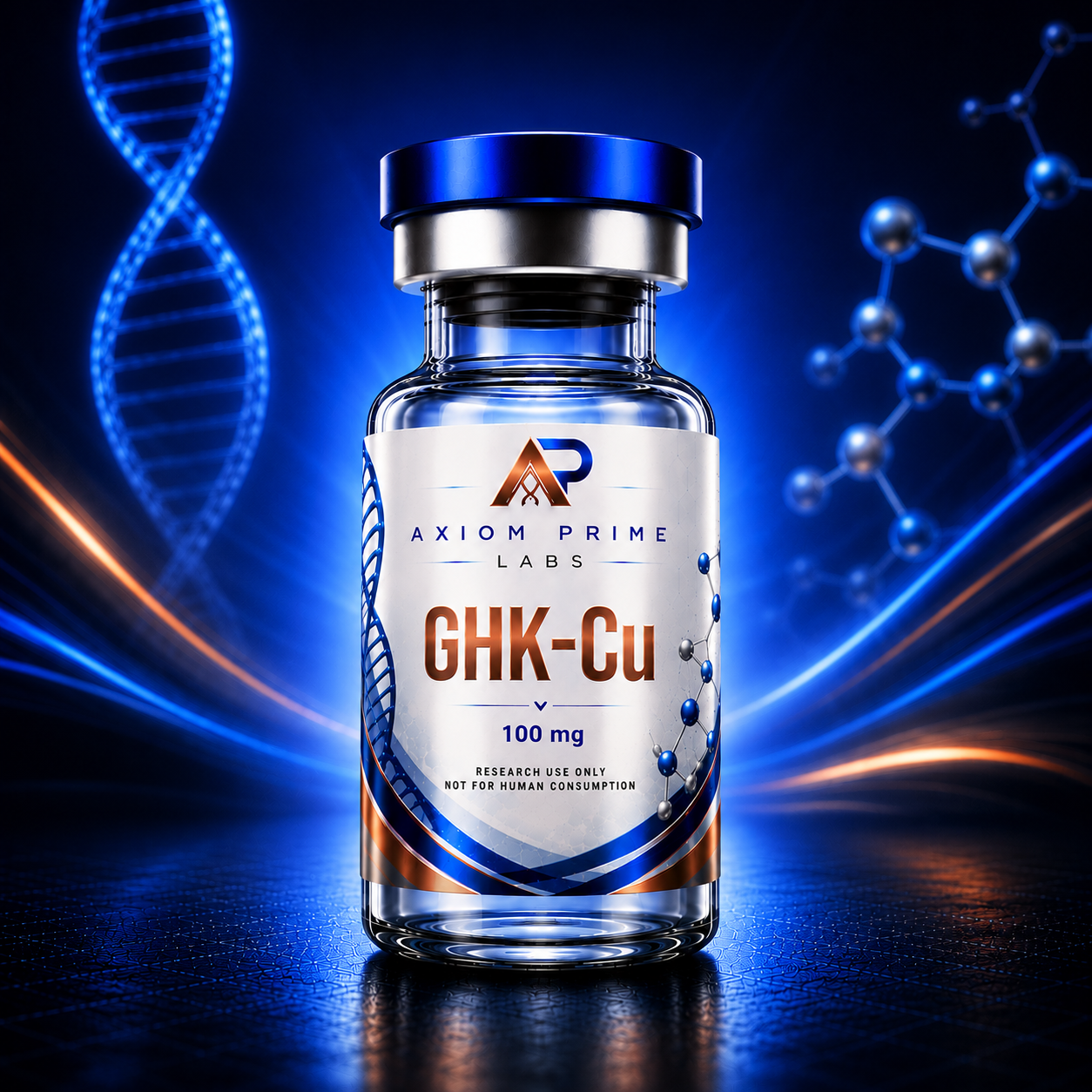
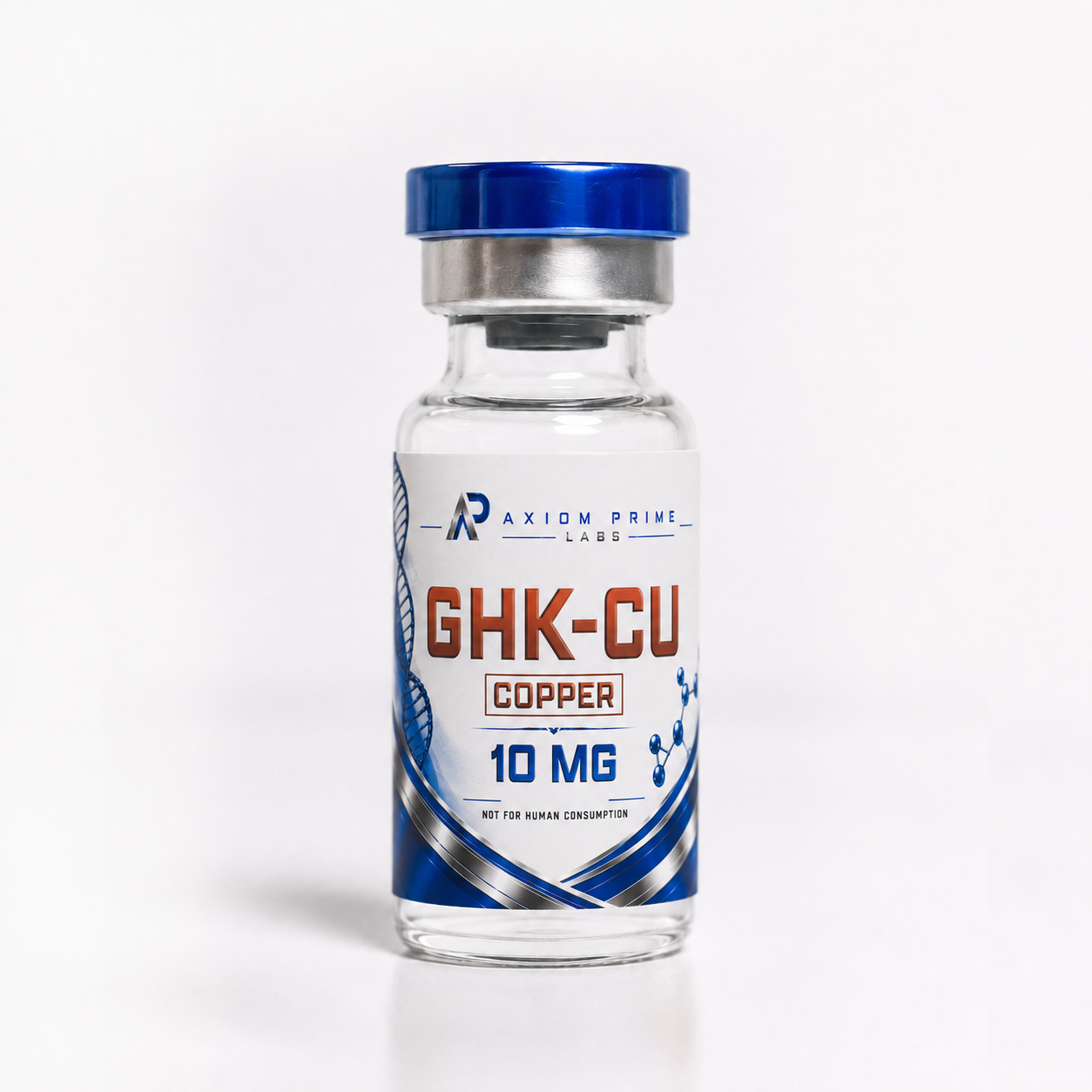
GHK-Cu 100 mg
GHK-Cu (Glycyl-L-Histidyl-L-Lysine Copper Complex) is a naturally occurring copper-binding tripeptide that has become one of the most extensively investigated signaling peptides in regenerative biology and molecular research. First identified in human plasma, GHK-Cu is recognized for its ability to bind copper ions and participate in numerous biological processes involved in cellular communication, extracellular matrix regulation, and tissue physiology.
Its broad biological significance has made GHK-Cu an important research model across multiple scientific disciplines, including dermatological science, connective tissue biology, neuroscience, wound biology, and healthy aging research. Ongoing laboratory investigations continue to examine its influence on gene expression, cellular signaling pathways, and tissue remodeling.
At Axiom Prime Labs, every vial of GHK-Cu is manufactured to rigorous quality standards, providing researchers with laboratory-grade materials engineered for exceptional purity, consistency, and scientific reliability.
Scientific Background
GHK-Cu is a naturally occurring tripeptide composed of the amino acids glycine, histidine, and lysine, complexed with a copper (II) ion. It was first isolated from human plasma in the early 1970s and has since been identified in saliva, urine, and other biological tissues.
Researchers have observed that endogenous GHK-Cu concentrations tend to decline with age, leading to significant scientific interest in understanding its biological role in tissue maintenance and cellular regulation.
Unlike many synthetic research peptides, GHK-Cu represents a naturally occurring signaling molecule that participates in multiple physiological processes. Its ability to bind copper, an essential trace element involved in numerous enzymatic reactions, has contributed to decades of research exploring its molecular and cellular functions.
Today, GHK-Cu remains one of the most widely published peptides in regenerative biology and tissue science.
Mechanism of Action
Current research indicates that GHK-Cu functions as a multifunctional signaling peptide capable of influencing numerous biological pathways associated with cellular regulation and extracellular matrix homeostasis.
Laboratory investigations continue to examine its interaction with:
- Gene expression pathways
- Copper-dependent enzymatic activity
- Extracellular matrix remodeling
- Fibroblast signaling
- Collagen and elastin biology
- Angiogenic signaling pathways
- Antioxidant defense systems
- Cellular communication networks
- Inflammatory signaling mechanisms
- Tissue remodeling processes
Rather than acting through a single receptor, GHK-Cu appears to participate in complex biological signaling networks that remain an active focus of ongoing molecular research.
Current Areas of Research
GHK-Cu has been investigated across numerous areas of regenerative and molecular science. Current laboratory research includes:
- Skin biology and extracellular matrix research
- Connective tissue physiology
- Collagen and elastin regulation
- Hair follicle biology
- Wound-healing models
- Angiogenesis
- Neurobiology
- Antioxidant mechanisms
- Cellular senescence
- Healthy aging research
- Copper homeostasis
- Gene regulation
These areas continue to evolve as researchers seek to better understand the peptide’s broad biological activity and its role in cellular communication.
Research Highlights
- Naturally Occurring Copper-Binding Tripeptide
- High-Purity Lyophilized Research Material
- Laboratory Research Grade
- Manufactured Under Rigorous Quality Standards
- Batch-Tested for Identity and Purity
- Excellent Batch-to-Batch Consistency
- Precision Engineered for Scientific Investigation
- Securely Packaged for Laboratory Storage
Product Specifications
| Specification |
Details |
| Product Name |
GHK-Cu |
| Full Name |
Glycyl-L-Histidyl-L-Lysine Copper Complex |
| Peptide Class |
Copper-Binding Tripeptide |
| Sequence |
Gly-His-Lys |
| Molecular Formula |
C₁₄H₂₄CuN₆O₄ |
| Molecular Weight |
401.93 g/mol |
| Purity |
≥98% (HPLC) |
| Appearance |
Blue Lyophilized Powder |
| Solubility |
Sterile Laboratory Water or Bacteriostatic Water |
| Storage |
Refrigerate Lyophilized Product (2–8°C) |
| Shipping |
Temperature-Controlled Packaging |
| Research Grade |
Laboratory Use Only |
Storage & Handling
To preserve peptide integrity, lyophilized GHK-Cu should be stored under refrigerated conditions between 2–8°C (36–46°F) and protected from prolonged exposure to heat, moisture, and direct light.
Researchers should follow established laboratory handling procedures during preparation and storage to help maintain product stability and minimize contamination throughout experimental use.
Why Researchers Choose GHK-Cu
GHK-Cu has earned widespread recognition within the scientific community because of its naturally occurring origin, broad biological relevance, and extensive body of published research. Its involvement in cellular communication, extracellular matrix regulation, and tissue physiology has established GHK-Cu as one of the most versatile peptides available for laboratory investigation.
Its continued study across regenerative biology, dermatological science, and molecular research highlights its importance as a valuable research material for investigators seeking to better understand complex cellular processes.
Frequently Asked Questions
What is GHK-Cu?
GHK-Cu is a naturally occurring copper-binding tripeptide that has been extensively studied for its role in cellular communication, extracellular matrix biology, and regenerative science.
Why is copper important to GHK-Cu?
Copper is an essential trace element involved in numerous enzymatic and biological processes. The copper ion associated with GHK-Cu is believed to contribute to many of the peptide’s biological interactions currently under investigation.
What makes GHK-Cu unique?
Unlike many synthetic peptides, GHK-Cu occurs naturally within the human body and has been the subject of decades of scientific research examining gene regulation, tissue biology, and cellular signaling.
Why is peptide purity important?
High-purity research materials help support experimental consistency and reduce the presence of impurities that could influence laboratory findings, making purity an essential component of reliable scientific research.