How to Store Lyophilized Research Peptides: A Practical Lab Guide
Research peptides are sensitive materials. Even a high-purity batch can degrade if it’s stored or handled poorly, and degraded material leads to inconsistent results. Good storage practice is one of the simplest ways to protect the integrity of your research.
This guide covers general laboratory best practices for storing lyophilized (freeze-dried) peptides and peptide solutions. Always follow any product-specific storage information provided with your material.
Why peptides degrade
Peptides can break down through several pathways, including hydrolysis (reaction with water), oxidation (particularly in sequences containing methionine, cysteine or tryptophan), and aggregation. The main factors that speed up degradation are:
- Moisture
- Heat
- Light
- Oxygen
- Repeated freeze-thaw cycles
Lyophilization removes water from the material, which is why freeze-dried peptides are considerably more stable than peptides in solution.
Storing lyophilized peptides
- Short term: keep sealed vials refrigerated at 2–8°C (36–46°F).
- Long term: many laboratories store lyophilized peptides frozen, commonly at −20°C or colder, to maximize stability.
- Keep vials sealed until you need them, and protect them from light (an amber container or a closed box works well).
- Avoid humidity. Lyophilized powder readily absorbs moisture from the air.
Let vials reach room temperature before opening
One of the most common handling mistakes is opening a cold vial straight from the refrigerator or freezer. Condensation forms on the cold powder and introduces moisture. Allow the sealed vial to equilibrate to room temperature in a dry environment before opening it, then reseal it promptly.
Peptides in solution
Once a peptide is reconstituted, it becomes much less stable. General laboratory practice includes:
- Using sterile, appropriate solvents and clean technique.
- Storing solutions refrigerated and using them within a defined period appropriate to the peptide and the experiment.
- Aliquoting solutions into single-use portions to avoid repeated freeze-thaw cycles, which can damage peptide structure.
- Labeling every aliquot with the peptide name, concentration, lot number and date.
Record keeping supports reproducibility
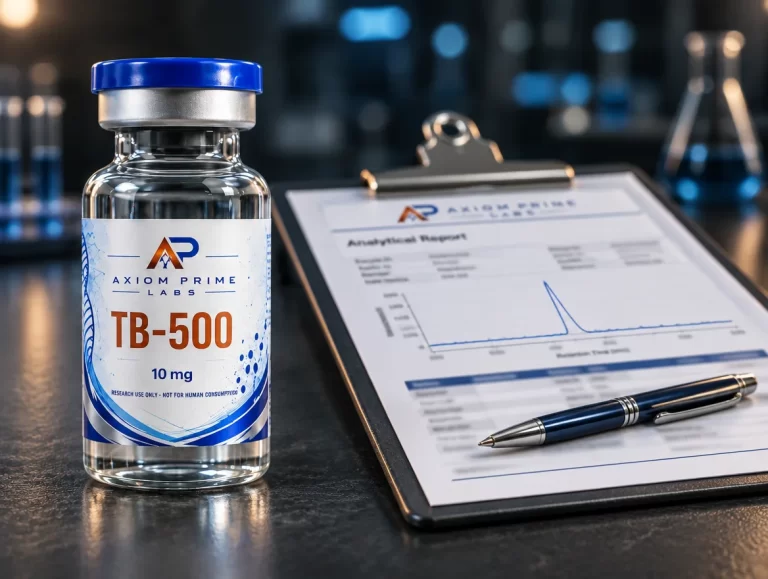
Track the lot number, date received, storage conditions and date of reconstitution for every vial. If results ever look inconsistent, these records make it far easier to identify whether storage or a specific batch is the cause. Pair your records with the batch Certificate of Analysis for a complete picture.
How Axiom Prime Labs ships and packages
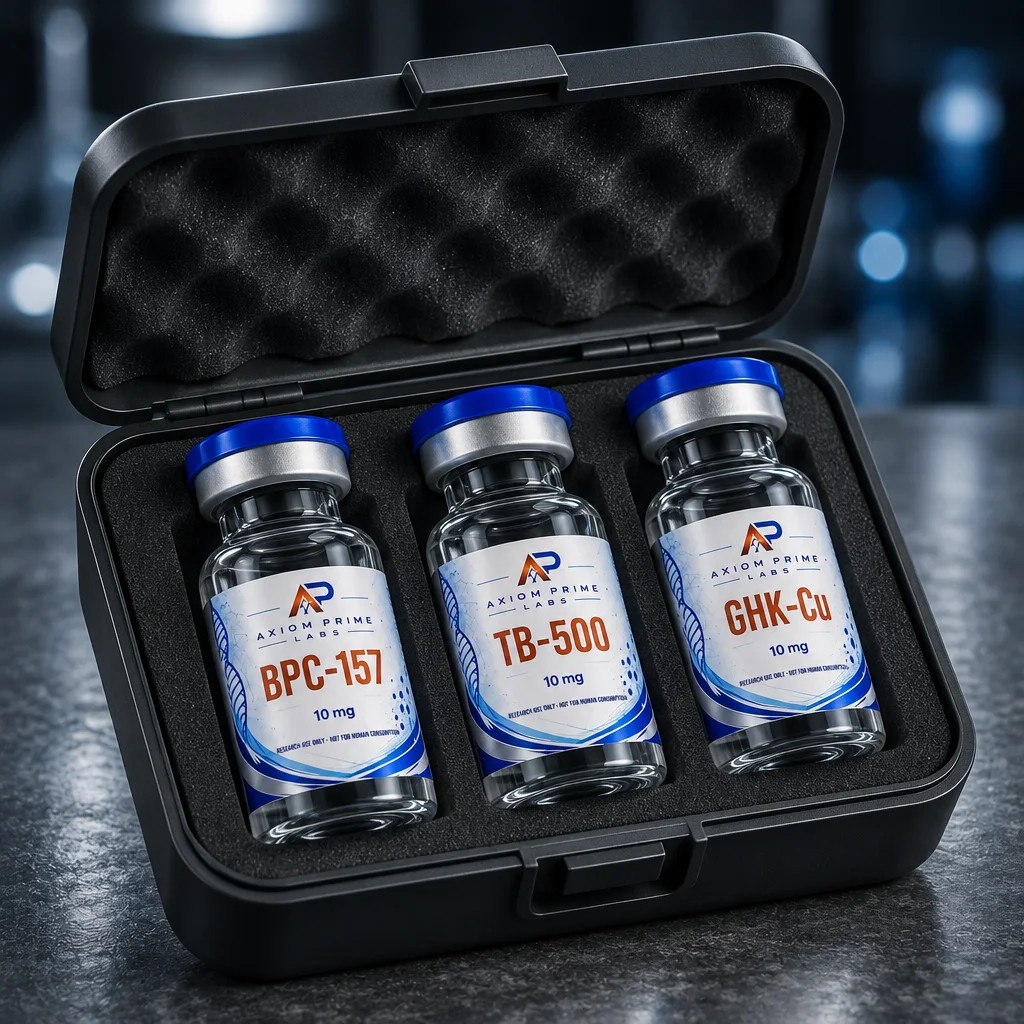
Our research materials are supplied lyophilized, packed with care to protect integrity in transit, and shipped quickly within the United States. Orders paid before 12 PM CT on business days generally ship the same day. Product-specific storage information is listed on every product page. Browse our full range of research peptides and research stacks.
Quick storage checklist
- Refrigerate (2–8°C) for the short term; freeze for long-term storage.
- Keep vials sealed, dry and away from light.
- Warm sealed vials to room temperature before opening.
- Aliquot solutions and avoid repeated freeze-thaw cycles.
- Label and log everything, including lot numbers.
This guide describes general laboratory handling practices for research materials only. All Axiom Prime Labs products are for laboratory research use only and are not for human or veterinary use.
Research-grade materials, batch-tested
Every Axiom Prime Labs product is supported by analytical testing with a Certificate of Analysis available for every batch. U.S. shipping, with free shipping on orders of $200+.