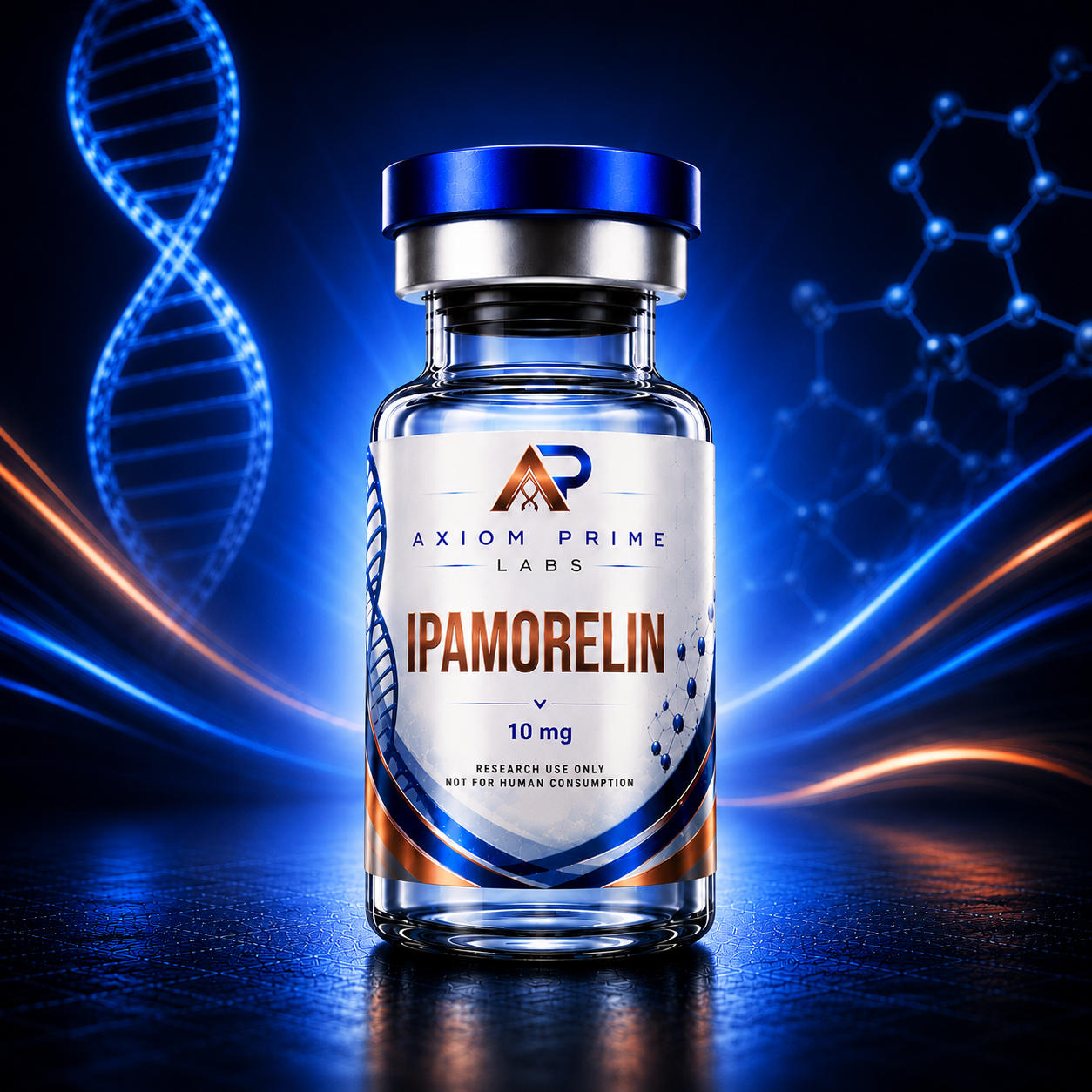
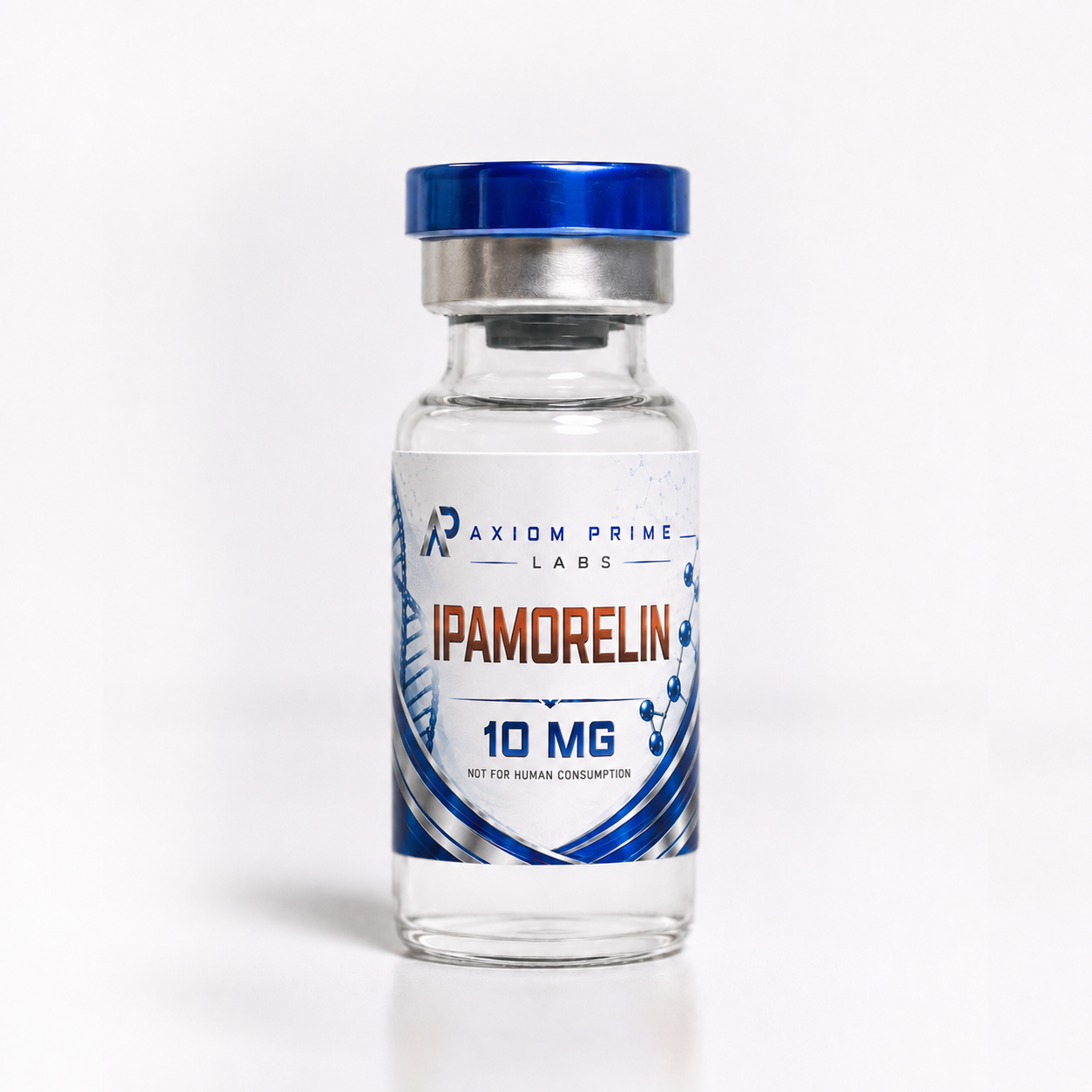
Ipamorelin 10 mg
Ipamorelin is a synthetic pentapeptide that has become an important subject of investigation in endocrine research due to its selective interaction with the growth hormone secretagogue receptor (GHSR-1a). Designed to stimulate this receptor with a high degree of specificity, Ipamorelin has attracted scientific interest for its role in growth hormone signaling while demonstrating minimal interaction with several other endocrine pathways under laboratory conditions.
Its receptor selectivity has made Ipamorelin a valuable research tool for scientists studying endocrine physiology, peptide receptor biology, cellular signaling, and metabolic regulation. Ongoing preclinical investigations continue to expand our understanding of its biological activity and molecular characteristics.
At Axiom Prime Labs, every vial of Ipamorelin is manufactured under rigorous quality standards to provide researchers with laboratory-grade materials engineered for purity, consistency, and scientific excellence.
Scientific Background
Ipamorelin belongs to a class of synthetic peptides known as growth hormone secretagogues (GHSs). Developed through peptide engineering, it was designed to selectively activate the growth hormone secretagogue receptor (GHSR-1a), which plays an important role in endocrine signaling.
Unlike some earlier compounds investigated within the same class, Ipamorelin has been studied for its receptor specificity, making it an important model in laboratory investigations exploring hormone regulation and peptide-receptor interactions.
Over the years, Ipamorelin has become widely utilized in experimental research focused on endocrine physiology, metabolic science, and cellular communication.
Mechanism of Action
Current research suggests that Ipamorelin selectively binds to the growth hormone secretagogue receptor (GHSR-1a) located primarily within the pituitary gland and hypothalamus. Activation of this receptor initiates intracellular signaling pathways involved in the physiological regulation of growth hormone secretion.
Researchers continue to investigate its interaction with:
- Growth hormone secretagogue receptor (GHSR-1a)
- Endocrine signaling pathways
- Pituitary physiology
- Hypothalamic regulation
- Cellular communication networks
- Metabolic signaling
- Peptide receptor biology
- Neuroendocrine regulation
Although these biological mechanisms have been extensively explored in laboratory settings, additional research continues to improve our understanding of Ipamorelin’s molecular behavior and physiological interactions.
Current Areas of Research
Ipamorelin continues to be investigated across several scientific disciplines, including endocrine biology and metabolic research. Areas of ongoing investigation include:
- Growth hormone physiology
- Endocrine system research
- Neuroendocrine signaling
- Peptide receptor biology
- Metabolic regulation
- Cellular communication
- Protein metabolism
- Body composition research
- Healthy aging models
- Exercise physiology
These areas remain active fields of scientific investigation, with researchers working to better understand the biological processes associated with endocrine regulation.
Research Highlights
- High-Purity Lyophilized Peptide
- Laboratory Research Grade
- Manufactured Under Rigorous Quality Standards
- Batch-Tested for Identity and Purity
- Excellent Batch-to-Batch Consistency
- Precision Engineered for Scientific Research
- Securely Packaged for Laboratory Storage
- Intended Exclusively for Research Applications
Product Specifications
| Specification |
Details |
| Product Name |
Ipamorelin |
| Peptide Class |
Synthetic Pentapeptide |
| Sequence |
Aib-His-D-2-Nal-D-Phe-Lys-NH₂ |
| Purity |
≥98% (HPLC) |
| Appearance |
White to Off-White Lyophilized Powder |
| Solubility |
Sterile Laboratory Water or Bacteriostatic Water |
| Storage |
Refrigerate Lyophilized Product (2–8°C) |
| Shipping |
Temperature-Controlled Packaging |
| Research Grade |
Laboratory Use Only |
Storage & Handling
To maintain peptide integrity, lyophilized Ipamorelin should be stored refrigerated between 2–8°C (36–46°F) and protected from excessive heat, moisture, and direct light. Researchers should follow established laboratory handling procedures to preserve product stability and minimize contamination during experimental preparation.
Why Researchers Choose Ipamorelin
Ipamorelin has become one of the most extensively studied selective growth hormone secretagogues because of its receptor specificity and broad applications in endocrine research. Its well-characterized interaction with GHSR-1a continues to make it a valuable tool for investigators studying hormone regulation, metabolic biology, and peptide receptor pharmacology.
The Axiom Prime Labs Quality Commitment
At Axiom Prime Labs, quality is the foundation of everything we produce.
Every research peptide is manufactured using carefully controlled production standards and undergoes rigorous identity and purity verification before release. Our commitment to precision manufacturing, scientific integrity, and batch-to-batch consistency provides researchers with dependable laboratory materials engineered to support reproducible scientific investigation.
We believe meaningful research begins with uncompromising quality.
Frequently Asked Questions
What is Ipamorelin?
Ipamorelin is a synthetic pentapeptide that is widely investigated in laboratory research involving endocrine physiology, peptide receptor biology, and growth hormone signaling.
What makes Ipamorelin unique?
Researchers have shown particular interest in Ipamorelin because of its selective interaction with the growth hormone secretagogue receptor (GHSR-1a), making it an important research tool for studying endocrine regulation.
What does lyophilized mean?
Lyophilization, or freeze-drying, is a preservation process that removes moisture while maintaining peptide stability during storage and transportation. Researchers reconstitute lyophilized peptides according to established laboratory protocols before experimental use.
Why is peptide purity important?
High-purity research materials help support experimental consistency and reduce the presence of impurities that could influence laboratory findings.