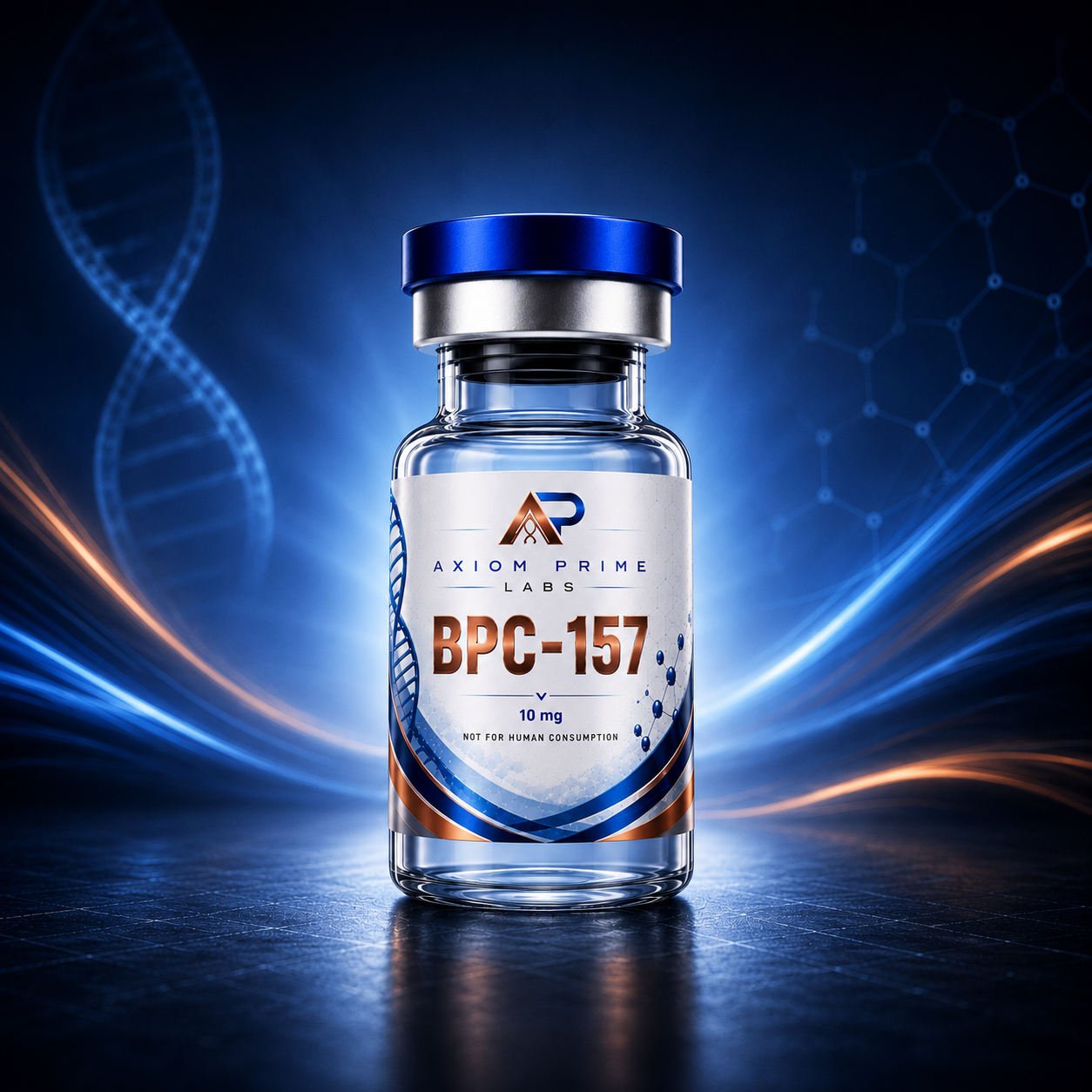
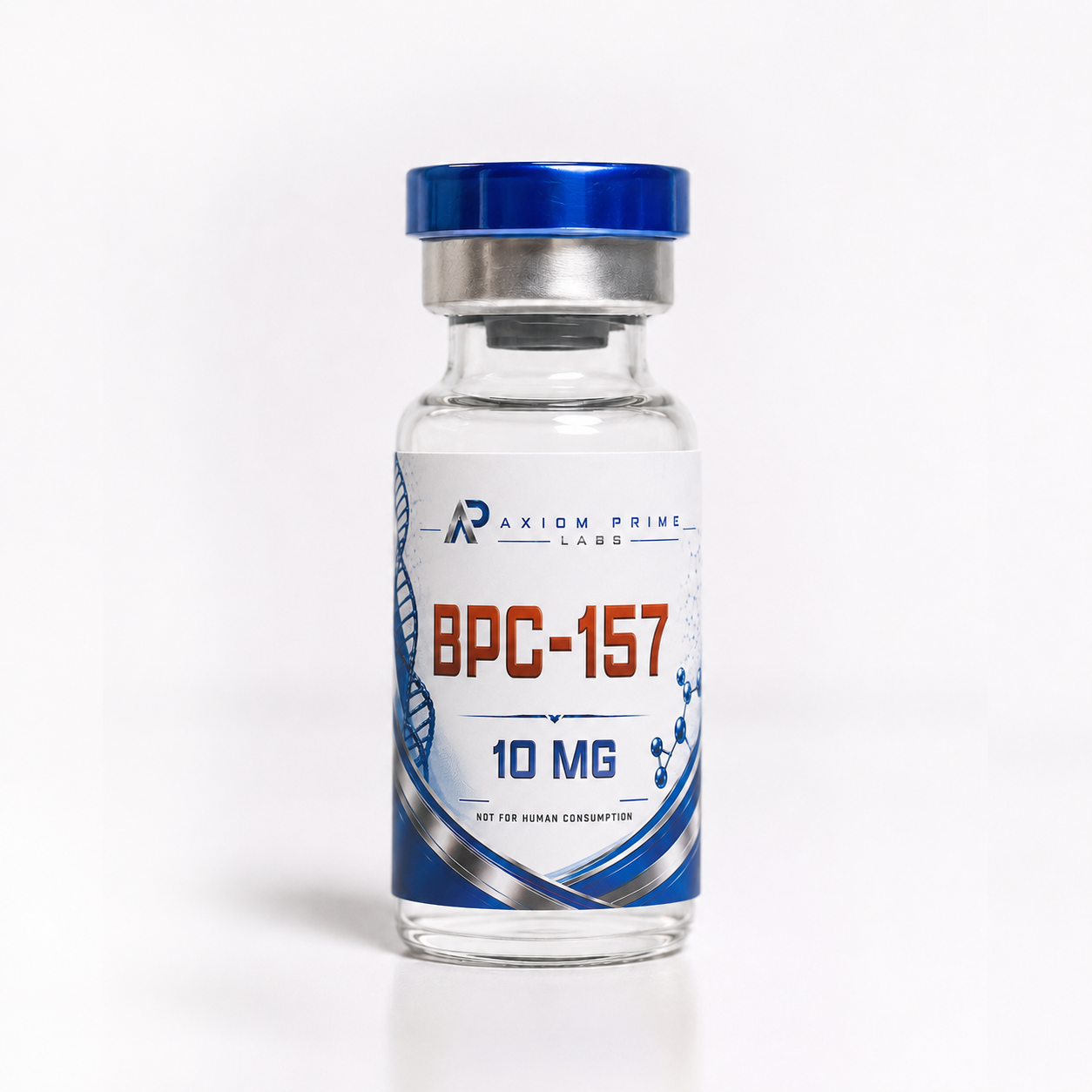
BPC-157 10 mg
Product Overview
BPC-157 is a synthetic pentadecapeptide (15-amino-acid peptide) that has become one of the most extensively investigated compounds in modern peptide research. Originally derived from a protective protein sequence identified in gastric tissue, BPC-157 has attracted significant scientific interest for its broad range of biological interactions involving cellular signaling, tissue biology, angiogenesis, and regenerative processes.
Researchers continue to investigate BPC-157 because of its molecular stability, unique biological activity, and potential influence on multiple signaling pathways associated with tissue maintenance and cellular communication. While much of the published literature remains preclinical, BPC-157 has become an important research tool across numerous areas of regenerative biology and experimental science.
At Axiom Prime Labs, every vial of BPC-157 is manufactured under rigorous quality standards to provide researchers with premium laboratory-grade materials engineered for exceptional purity, consistency, and scientific investigation.
Scientific Background
BPC-157, commonly referred to as Body Protection Compound-157, is a synthetic peptide consisting of fifteen amino acids derived from a naturally occurring protective protein found in gastric tissue. Since its discovery, the peptide has become a prominent subject of laboratory investigation because of its broad biological activity and interaction with multiple cellular signaling systems.
Researchers continue to examine BPC-157 in studies involving connective tissue biology, vascular physiology, gastrointestinal research, and cellular communication. Its remarkable stability and diverse experimental applications have established BPC-157 as one of the most recognized peptides in regenerative science.
Mechanism of Action
Current research suggests that BPC-157 may influence several interconnected biological pathways involved in cellular communication and tissue homeostasis. Investigators continue to study its interaction with:
- Nitric oxide signaling pathways
- Angiogenic growth factor regulation
- Fibroblast activity
- Collagen synthesis pathways
- Cellular migration
- Extracellular matrix remodeling
- Inflammatory signaling mechanisms
- Tissue regeneration pathways
These molecular interactions remain active areas of scientific investigation. Much of the current understanding is based on laboratory and preclinical research, and additional studies continue to expand knowledge of BPC-157’s biological functions.
Current Areas of Research
Scientific interest in BPC-157 spans multiple disciplines of regenerative biology and molecular science. Current laboratory research has explored its role in:
- Connective tissue biology
- Tendon and ligament physiology
- Skeletal muscle research
- Gastrointestinal biology
- Angiogenesis
- Cellular signaling
- Nitric oxide regulation
- Soft tissue remodeling
- Experimental wound-healing models
- Regenerative medicine research
These areas remain the focus of ongoing scientific investigation designed to improve understanding of tissue maintenance, cellular communication, and biological repair mechanisms.
Research Highlights
✔ Premium Laboratory-Grade Peptide
✔ High-Purity Lyophilized Formula
✔ Manufactured Under Rigorous Quality Standards
✔ Verified Identity and Purity Testing
✔ Exceptional Batch-to-Batch Consistency
✔ Precision Engineered for Scientific Research
✔ Secure Laboratory Packaging
✔ Intended for Qualified Research Professionals
Why Researchers Choose BPC-157
BPC-157 has become one of the most widely recognized peptides in regenerative biology because of its broad range of experimental applications and continued scientific interest. Its molecular stability, diverse biological interactions, and extensive body of preclinical research have established it as an important tool for investigators studying tissue physiology, cellular signaling, vascular biology, and regenerative science.
Researchers value BPC-157 for its versatility across multiple areas of investigation, making it one of the foundational peptides within modern laboratory research.
The Axiom Prime Labs Quality Commitment
Quality Without Compromise
At Axiom Prime Labs, quality is engineered into every stage of our manufacturing process. Every research peptide is produced under carefully controlled standards and undergoes rigorous identity and purity verification to help ensure exceptional consistency and reliability.
We are committed to providing researchers with premium laboratory-grade materials that support scientific excellence through precision, transparency, and uncompromising quality.
Frequently Asked Questions
What is BPC-157?
BPC-157 is a synthetic peptide composed of fifteen amino acids that has become widely investigated in laboratory research involving tissue biology, cellular signaling, and regenerative science.
Why is BPC-157 widely researched?
Researchers continue to investigate BPC-157 because of its interaction with numerous biological pathways associated with cellular communication, connective tissue physiology, vascular biology, and regenerative processes.
What does lyophilized mean?
Lyophilization, commonly known as freeze-drying, is a preservation process that removes moisture while helping maintain peptide stability during storage and transportation. Researchers reconstitute lyophilized peptides according to established laboratory protocols before experimental use.
Why is peptide purity important?
High-purity research peptides help promote experimental consistency by reducing impurities that could influence laboratory outcomes. Maintaining strict quality standards is essential for producing dependable research materials.